Sources & interpretation

Argument

The four sources used in this project show that Indian Removal was a deeply unjust and harmful policy in which the United States used its power to take Native homelands, justify forced displacement with misleading language, and ultimately cause devastating suffering for Native communities. Together, these sources prove that Indian Removal was not voluntary, not protective, and not fair—it was a systematic effort to dispossess Native nations and force them from their lands for the benefit of white expansion. They reveal how the government created a long, step-by-step process that looked legal on paper but was profoundly unjust in practice.

The 1798 Treaty with the Cherokee shows that this injustice began long before the 1830s. In that treaty, the United States pressured the Cherokee to give up land, accept boundaries chosen by the government, and rely on federal officials for mapping and payment. Although written as a formal agreement, the treaty reflects unequal power and early land loss, proving that the push to remove Native nations started decades before it became federal policy.

The Indian Removal Act of 1830 then turned this pressure into national law. It claimed that removal would be voluntary and beneficial, but in reality it gave the President broad authority to push tribes into signing removal treaties at a time when many were already facing state harassment, loss of legal rights, and settler violence. The Act shows how the government used legal language to make a harmful policy appear fair, even though tribes had little real choice.

Andrew Jackson’s Message to Congress further exposes how removal was justified. Jackson describes the policy as kind and protective, arguing that Native nations would supposedly be safer and more successful if they moved west. His message portrays Native people as uncivilized and unable to live alongside white settlers, using paternalistic language that hides the government’s true motives: gaining land for expansion, farming, and settlement. This source shows how leaders used positive-sounding rhetoric to mask a policy that was actually about removing Native people from valuable land.

Finally, the family stories from the Trail of Tears reveal the true human impact behind all the laws, treaties, and political speeches. These firsthand accounts describe Cherokee families being forced from their homes, marching through harsh weather, suffering from hunger and disease, and watching loved ones die along the way. Thousands of Native people died during the journey west, proving that removal was not peaceful or voluntary—it was a violent and traumatic displacement.

Taken together, these four sources show a complete picture of how Native Americans were treated during Indian Removal: early treaties chipped away at their land, new laws gave the government more power to push them out, political leaders framed removal as benevolent, and the actual experience was one of severe suffering and loss. Overall, the sources make it clear that Indian Removal was a deeply wrong, government-driven process that caused immense damage to Native nations and reshaped their history through force, injustice, and loss.
Key themes

Scan of 1798 Treaty with the Cherokee heading and signatories Treaty with the Cherokee, 1798 (7 Stat. 62)
Treaty with the Cherokee, 1798 (7 Stat. 62)

Treaty with the Cherokee, 1798

  • Creator: United States commissioners George Walton, Lt. Col. Thomas Butler; Cherokee signatories
  • Date: Oct. 2, 1798 (ratified Apr. 30, 1802; proclaimed May 4, 1802)
  • Origin: Council house near Tellico, on Cherokee ground
  • Type: Treaty
  • Citation: 7 Stat. 62; Treaties OKState (RIT_029, NAI_170281481)

Annotations

  • Significance: Formal “protection” and boundary marking accompany land cessions, reflecting unequal power and early dispossession.
  • Mechanism: Commissioners run and map lines; payments and annuities tie cessions to ongoing federal oversight.
  • Continuity: Presents removal pressure long before the 1830 Act by normalizing cession and right-of-way.
Excerpt
“In acknowledgement for the protection of the United States… the Cherokee nation agree, and do hereby relinquish and cede to the United States, all the lands within the following points and lines…”

View the treaty

Printed text of the Indian Removal Act 1830
Indian Removal Act (May 28, 1830)

Indian Removal Act (1830)

  • Creator: United States Congress
  • Date: May 28, 1830
  • Origin: U.S. federal law
  • Type: Statute
  • Citation: Perdue & Green, The Cherokee Removal (1995), pp. 116–117

Annotations

  • Significance: Grants broad presidential power for exchanges and removal, framed as voluntary and “assistance,” enabling coercive treaties.
  • Guarantees: Pledges to “secure and guarantee” new lands, while reserving reversion to U.S. if tribes “become extinct or abandon” them.
  • Aid language: Promises support for removal and first-year subsistence; rhetoric of benevolence masks structural harm.
Excerpt
“It shall and may be lawful for the President… to exchange… and to cause such aid and assistance to be furnished to the emigrants as may be necessary and proper…”

View the act

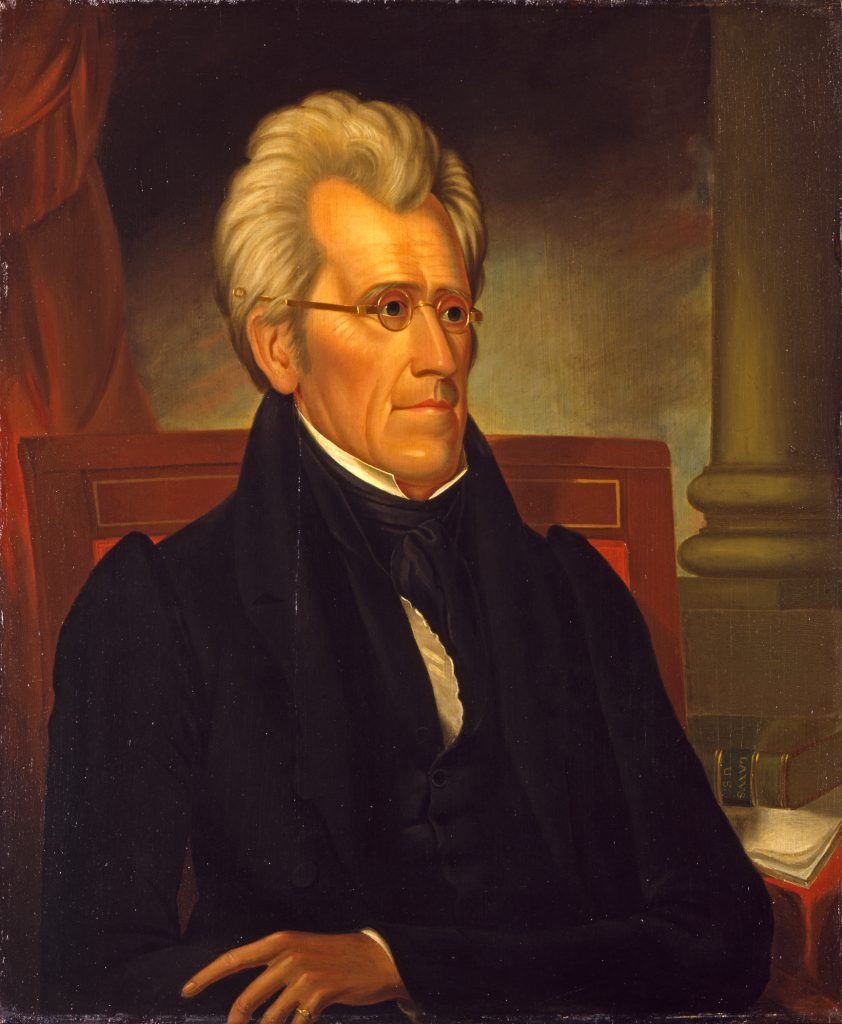
Portrait of Andrew Jackson and excerpted text from the 1830 message
Andrew Jackson’s Annual Message (Dec. 6, 1830)

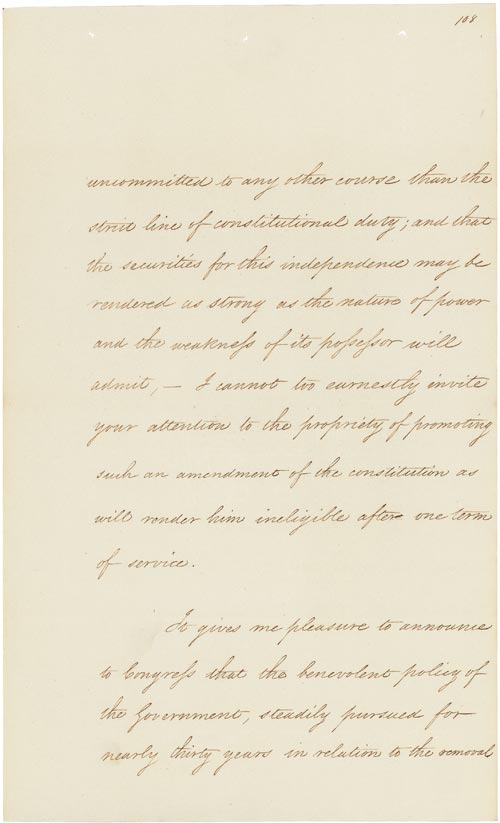
President Andrew Jackson’s Message to Congress “On Indian Removal” (1830)

  • Creator: President Andrew Jackson
  • Date: December 6, 1830
  • Origin: Presidential Messages, 1789–1875, RG 46 (U.S. Senate)
  • Type: Executive address
  • Citation: National Archives Milestone Documents

Annotations

  • Significance: Justifies removal as “benevolent,” linking it to state prosperity and frontier security; paternalist portrayal of Native peoples.
  • Expansion: Removal would “enable” states to grow in “population, wealth, and power,” revealing settler aims.
  • Outcome: Nearly 70 removal treaties moved ~50,000 people and opened ~25 million acres to settlement and slavery expansion.
Excerpt
“The benevolent policy of the Government… is approaching to a happy consummation… [It] will enable those States to advance rapidly in population, wealth, and power.”

View the message

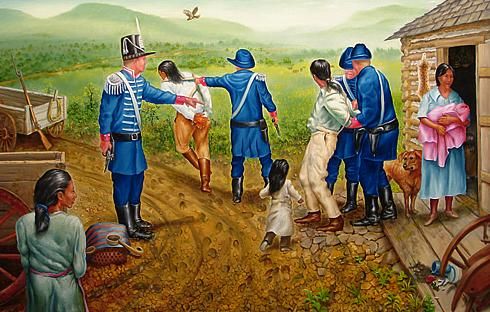
Historic trail scene illustration representing forced migration
Family Stories from the Trail of Tears

Family Stories from the Trail of Tears

  • Creator: Indian-Pioneer History Collection; edited by Lorrie Montiero
  • Date: Oral histories recorded primarily in the 1930s
  • Origin: UALR Tribal Writers Exhibits
  • Type: Oral histories
  • Citation: UALR Exhibits (machine-readable transcription)

Annotations

  • Significance: Firsthand accounts of forced marches, exposure, hunger, disease, and death; shows the lived trauma behind official policy.
  • Details: Stories recount deaths from dysentery, scarcity of food and water, winter suffering, and children dying en route.
  • Memory: Confirms removal was not peaceful or voluntary; communities endured violence, loss, and lasting grief.
Excerpt
“Old men and women… would ride but most of them walked and the men in charge drove them like cattle and many died enroute… [In winter] all suffered with cold and hunger.”

View the family stories

Why it matters

Reading law, treaty text, and political speech alongside community memory reveals the gap between official claims and lived experience. These sources demonstrate how a policy framed as orderly and benevolent produced dispossession, death, and long-term harm to Native nations. Recognizing this history is essential to understanding sovereignty, rights, and how power shapes narratives.